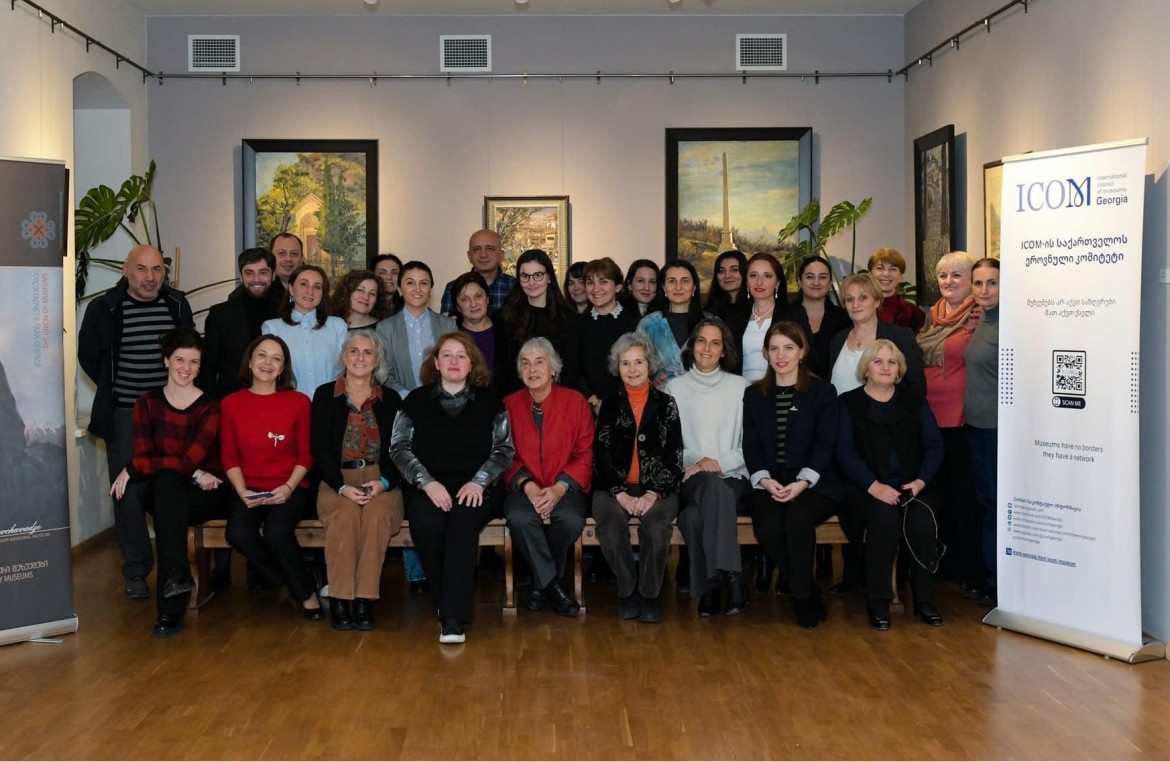
The second day began with an overview of Blue Shield Georgia’s role in heritage protection, presented by Tamar Sopromadze, Chair of Blue Shield Georgia. This introduction set the stage for understanding the local and international collaboration required for effective heritage protection during crises.
The morning session was led by Claire Leger, Emergency Response Director of Blue Shield France. In her presentation, "Preparation/Planning: Key Steps for Drafting a Cultural Heritage Safeguarding Plan," Claire emphasized the critical role of proactive planning, aligned with the principles of the 1954 Hague Convention. Using the C2RMF methodology, participants were guided through the essential steps of creating a Cultural Heritage Safeguarding Plan (CHSP), including gathering critical information, identifying priority works, preparing safe havens, and organizing emergency resources. Practical exercises allowed participants to adapt these methodologies to their own institutional needs, resulting in a collaborative learning experience.
The afternoon introduced Crisis communication as an important component of emergency preparedness. Deborah Ziska, Chair of ICOM MPR, delivered a session "Dare to Dream: Communication and Empowerment – From Conflict Zones to the Global Community." Deborah, along with experts from Ukraine and Georgia, Ihor Poshyvailo from the Maidan Museum and Vasyl Rozhko from Tustan, shared practical strategies for preserving cultural heritage during conflict. Topics covered included the role of digitization, documentation, and community engagement in strengthening heritage protection. Participants engaged in collaborative exercises to develop communication protocols, simulate crisis scenarios, and share best practices. The discussions were enriched by the experiences of participants and presenters, culminating in summaries of actionable insights that could be implemented in their respective institutions.
By the end of the day, participants gained an understanding of how strategic planning, effective communication, and people-centered approaches can significantly enhance cultural heritage safeguarding efforts. These sessions provided both the theoretical frameworks and practical tools necessary to address the complex challenges of emergencies and crises.
Day 3: Documentation and Restoration Techniques
The final day sessions were led by experts from the Istituto Centrale per il Restauro (ICR), who shared their extensive experience in managing the aftermath of natural disasters.
The morning began with Maria Elena Corrado presenting on "Management of Cultural Heritage (CH) Debris and Emergency Management Systems." Drawing from case studies of earthquake recovery efforts in Central Italy, Maria Elena detailed the typologies of cultural heritage debris and the interventions necessary for their management. She introduced participants to advanced tools like GIS-based risk mapping and "Vincoli in Rete," a system developed by the Italian Ministry of Culture for prevention and emergency management. Participants also learned about post-earthquake collaborations with Italian forces, showcasing how coordinated efforts can secure both buildings and artworks in disaster-stricken areas.
Following this, Francesca Capanna presented on "Art Objects Recovery, Conservation, and Safety in Emergencies," emphasizing practical, low-cost solutions for artifact recovery and conservation. Using examples from the Central Italy earthquakes between 2009 and 2016, Francesca highlighted methods for establishing temporary deposits, administering first aid to damaged objects, and ensuring their safe storage. Her presentation also showcased the ongoing work at the Ancona deposit, where innovative approaches to cultural heritage preservation are continually being developed.
The sessions transitioned into group activities, where participants applied the recovery and conservation techniques discussed. Through case study scenarios, they practiced documenting and preparing artifacts for evacuation, addressing challenges such as prioritizing objects and ensuring their safety in temporary storage. The hands-on nature of the exercises fostered collaboration and reinforced the practical skills necessary for real-world application.s
The day concluded with a summary of key learnings and actionable strategies for cultural heritage preservation in emergencies. Participants shared their reflections on the techniques and tools introduced, emphasizing their relevance to diverse institutional contexts.
Evaluation
The ICOM Europe 2024 Training Series proved to be a highly effective initiative, addressing critical gaps in the preparedness of museum professionals for safeguarding cultural heritage in crisis-prone regions. Over the course of three intensive days, the program balanced theoretical insights with practical application, providing participants with essential tools to navigate challenges posed by natural disasters, human-induced crises, and conflicts. Feedback from participants emphasized the program's strong alignment with their professional needs, particularly its focus on ethical responsibilities, practical group work, and real-world case studies.
The interactive and collaborative format enabled participants to engage deeply with the content, share knowledge, and translate theoretical concepts into actionable strategies relevant to their institutions. Participants also acknowledged that the training addressed critical gaps in their preparedness, offering tools they could apply to protect their collections and communities.
Overall, the training reinforced the importance of global collaboration, proactive planning, and resilience-building as essential components of cultural heritage protection. As a result, the ICOM Europe 2024 Training Series highlighted the ongoing necessity of such programs in an increasingly complex and rapidly changing global context, ensuring that museum professionals remain equipped to safeguard cultural heritage effectively.